We discuss why closed casino surveillance networks still need a cyber-resilient design.

Blog
Tribal Casino Surveillance: The Future Needs of Security Leaders
Published:
May 2026
Author:
Travis Isom, Business Development Executive

We worked with Native Nation Events to speak to tribal security leaders about their current surveillance experiences and what they’re looking for in the future.
Tribal casino security leaders are navigating an increasingly complex surveillance landscape. From managing cyber security risks and improving collaboration with first responders to modernising ageing infrastructure, surveillance teams are under pressure to deliver smarter, faster, and more resilient operations.
To better understand these challenges, we surveyed fifteen senior leaders¹ across tribal casino security, surveillance, and casino management. The research explored current surveillance experiences, future technology priorities, and the operational gaps security leaders are trying to address.
The results revealed a clear appetite for innovation — particularly around AI, analytics, and remote monitoring — but also highlighted a disconnect between the operational outcomes respondents want and the technologies many are currently prepared to adopt.
Tribal casino surveillance is evolving beyond traditional monitoring
The research showed that tribal gaming operators are increasingly looking for surveillance systems that do more than simply record incidents. Security leaders want technology that improves threat detection, accelerates response times, and supports more coordinated operations across their casino environments.
Remote monitoring and AI emerged as the two most desired technological advancements among respondents.
For many leaders, the priority is operational coordination during live incidents. In fact, 42.9% of respondents who supported remote monitoring cited improving collaboration with first responders during active situations as the main reason.
“Remote monitoring is important to better coordinate active situations with first responders.”
At the same time, the survey exposed frustration with current surveillance capabilities. Nearly a quarter of respondents did not believe their surveillance systems performed well at threat detection, while a similar proportion felt their systems did not effectively support collaboration with first responders.
“My current surveillance system really lacks in all areas of operation.”
These findings point towards a wider industry shift. Tribal casino surveillance is moving away from passive monitoring and towards more connected, intelligence-led security operations capable of supporting real-time decision-making and coordinated response.
AI and analytics are becoming essential casino security technologies
Artificial intelligence and advanced analytics are increasingly viewed as critical tools for modern casino surveillance operations.
Respondents highlighted a growing demand for technologies that improve threat identification, detect suspicious behaviour, and support proactive intervention before incidents escalate.
Several respondents specifically referenced the importance of facial recognition, weapons detection, and behavioural analytics.
One security leader stated:
“It is very important to know when a person comes into your business and has a gun or weapon. The system is just not as far advanced as I would like it to be.”
Others reinforced the growing role of intelligent analytics within surveillance environments, with a respondent commenting:
“Facial recognition and analytics are essential to help identify undesirables.”
The research also revealed the top risks tribal casino operators want surveillance systems to detect and mitigate. Suspicious behaviour ranked highest, followed by attempted theft by staff and aggressive behaviour.
These priorities demonstrate how surveillance expectations are evolving. Operators are no longer focused solely on evidence gathering after incidents occur. Increasingly, they want systems capable of identifying risk indicators in real time and supporting preventative security strategies.

“AI and access control expansion are both important.”
Cloud surveillance hesitation could slow operational progress
One of the most striking findings from the research was the tension between the desire for greater operational flexibility and hesitation around cloud adoption.
Despite strong interest in remote monitoring and collaboration, more than 40% of respondents were not enthusiastic about adopting cloud surveillance technology in the future.
This is significant because cloud-based surveillance platforms are particularly well-suited to many of the operational goals respondents identified, including:
- Remote viewing and monitoring
- Multi-site surveillance management
- Real-time collaboration with first responders
- Faster software and cyber security updates
- Improved scalability and resilience
The findings suggest that misconceptions around cloud security may still be influencing adoption decisions.
The report noted that concerns around cyber security could be contributing to the perception that cloud environments increase organisational risk. However, modern cloud infrastructure often provides extremely high levels of protection while simplifying maintenance, improving access to updates, and supporting easier integration with other technologies.
As operational demands continue to grow, cloud-enabled surveillance may become increasingly important for tribal casino operators looking to improve flexibility, resilience, and collaboration.
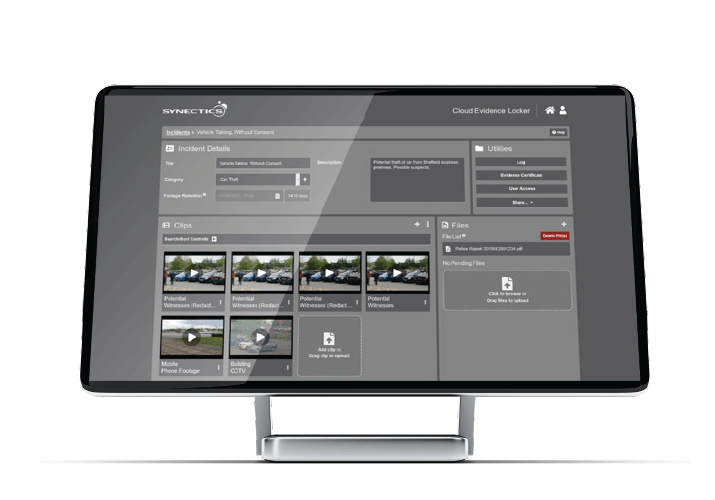
Critical Collaboration Made Easy
Share evidence securely with gaming regulators, first responders, internal teams, and third parties.
The Cloud Evidence Locker is natively supported in Synergy, enabling seamless upload and secure sharing of incident footage.
Learn More
Modern surveillance systems deliver better reliability and user experience
The research also identified a clear relationship between technology modernisation and operational satisfaction.
More than half of the respondents had not upgraded or replaced their surveillance system within the previous five years. Yet respondents operating newer systems consistently rated their technology more highly for both reliability and user experience.
Casinos with recently upgraded systems reported average scores of:
- 7/10 for user experience
- 9/10 for reliability
By comparison, organisations that had not upgraded within five years gave average scores of just 4/10 in both categories.
This gap is particularly important in highly regulated gaming environments where surveillance downtime can lead to operational disruption and regulatory fines.
One respondent highlighted the importance of smoother system management:
“I would like more flawless software updates.”
Another referenced the operational need for stronger alerting capabilities outside standard operating hours:
“Alarms detected during off hours.”
The findings reinforce a broader industry reality: ageing surveillance infrastructure can become a major operational vulnerability. Modern casino environments require systems that are reliable, easy to manage, adaptable to changing regulations, and capable of supporting increasingly complex security operations.

Cyber security and compliance are growing priorities
Casino surveillance systems play a critical role in managing operational, physical, legal, and cyber risk.
While most respondents felt their current systems were reasonably prepared to handle cyber security threats and evolving compliance requirements, more than a quarter stated that their systems were not adequately prepared for cyber security challenges.
This concern is especially relevant as cyber-attacks continue to increase across highly regulated industries.
The research suggests that older surveillance systems may struggle to keep pace with both emerging cyber security threats and changing gaming regulations. As a result, operators are increasingly seeking technologies that can adapt quickly while maintaining high resilience and operational continuity.
Cyber-Secure By Design
Our expert team walks through some practical strategies for strengthening cyber resilience and how Synergy is cyber-secure by design.
Watch the Webinar
The future of tribal casino surveillance
The survey results point towards an industry actively preparing for the next generation of casino security operations.
Tribal casino security leaders clearly recognise the growing importance of AI, advanced analytics, remote monitoring, and more connected surveillance environments. At the same time, the research highlights a need for greater awareness around how technologies such as cloud surveillance can support these evolving operational goals.
Moving forward, the organisations best positioned to strengthen security operations will be those that invest in flexible, scalable, and intelligence-driven surveillance ecosystems capable of:
- Improving threat detection
- Supporting faster incident response
- Enhancing collaboration with first responders
- Strengthening cyber security resilience
- Adapting to evolving compliance requirements
- Delivering more reliable day-to-day operations
The future of tribal casino surveillance will not simply be defined by adding more cameras or increasing monitoring coverage. It will be shaped by how effectively operators integrate intelligent technologies into a broader strategy focused on operational resilience, real-time situational awareness, and proactive risk management.
¹ We worked with Native Nation Events to speak to tribal security leaders about their current surveillance experiences and what they’re looking for in the future.