A guide to surveillance solutions suited for hazardous areas

eBook
Thermal Camera Guide for Oil and Gas
This guide outlines the differences between thermal and infrared cameras and why this matters when deciding when and where to use this technology.
Download the eBook
This comprehensive resource explains the differences between thermal and infrared technologies, when and where to use them, and how cooled and uncooled thermal cameras perform in challenging conditions. It covers essential considerations such as detection versus identification, operational range, cost-effectiveness over time, and the unique benefits thermal cameras bring to perimeter protection, vessel detection, and asset monitoring. The guide also addresses limitations, ensuring you can make informed, cost-efficient choices for your surveillance strategy.
The eBook provides practical insights for operators, security managers, and engineers working across offshore platforms, LNG plants, renewable energy facilities, utility networks, and other hazardous CNI sites. You will learn how to integrate thermal cameras into a unified security and surveillance solution to enhance early threat detection, monitor flares, detect gas leaks, and track equipment performance in low or no light. Real-world examples illustrate how thermal imaging can act as a first line of defence, reducing operational risks and improving incident response.
Contents
- Thermal and Infrared: key differences
- Why distance matters
- Why detection vs identification matters
- Process and maintenance applications
- When not to use thermal cameras
Download your free copy to understand how thermal camera technology can strengthen safety, protect assets, and ensure compliance across Energy, CNI, Renewables, and Utilities.
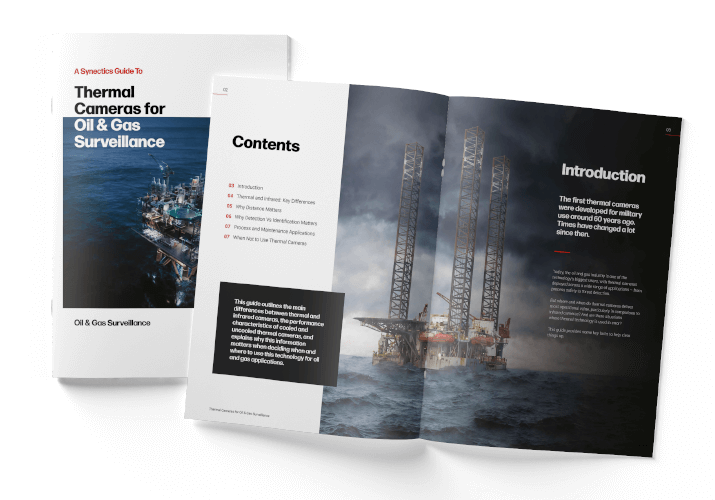
Thermal Cameras for Oil & Gas Surveillance
This guide outlines the differences between thermal and infrared cameras and why this matters when deciding when and where to use this technology.
Download eBook