Protection in the Toughest Conditions

Blog
Securing Offshore Wind: 6 Ways Synergy and COEX Can Help
Published:
November 2025

Offshore wind is vital to the energy transition. This blog examines six challenges operators face and how Synergy and COEX are designed to address them.
Synergy security and surveillance software and COEX marine-grade cameras help offshore wind operators protect remote assets, maintenance crews and critical energy infrastructure. Together, they provide centralised monitoring across turbines, offshore substations, landfall sites, subsea cables and export infrastructure.
Six key applications include:
- Remote offshore wind monitoring: Integrate CCTV, radar, AIS vessel tracking, alarms and condition sensors to monitor multiple wind farms from a central operations centre or mobile device.
- Reliable marine surveillance: Use DNV-certified COEX fixed, PTZ, thermal and multimodal cameras to maintain evidential-quality video in salt spray, high winds, vibration, storms and freezing fog.
- Subsea cable protection: Combine radar, AIS and thermal camera surveillance to detect vessels entering exclusion zones, anchoring near cable corridors or threatening export infrastructure.
- Offshore worker safety: Apply AI video analytics to monitor PPE compliance, falls and lone-working practices, helping protect maintenance crews working on turbines, nacelles and high-voltage equipment.
- Equipment condition monitoring: Integrate SCADA alarms with radiometric thermal imaging and automated workflows to identify overheating, corrosion, fluid leaks and other signs of equipment degradation.
- Cyber-physical security: Validate unexpected control changes using live video while protecting surveillance systems through encryption, role-based access, audit trails and secure remote access.
Synergy is NPSA CAPSS certified, providing independent assurance that cyber security is built into the platform’s design and operation. This is an important trust point for offshore wind operators protecting critical national infrastructure.
By combining Synergy with COEX cameras, offshore wind operators can improve situational awareness, strengthen cyber resilience and reduce unnecessary crew transfers. Earlier threat and fault detection also helps prevent damage, protect power generation and minimise costly offshore wind downtime.
Offshore wind is vital to the energy transition. But as farms expand and move further offshore, the risks multiply. Vulnerable subsea cables, uncrewed substations, and harsh marine conditions all increase the need for round-the-clock visibility.
This blog examines six challenges operators face and how Synergy and COEX are designed to address them.
1. Monitoring multiple remote sites
Utility-scale offshore wind farms can cover vast lease areas, with turbines and substations (both offshore and at landfall) spread over miles. Sending service crews offshore for routine checks is therefore costly and often hindered by weather conditions.
How Synergy helps
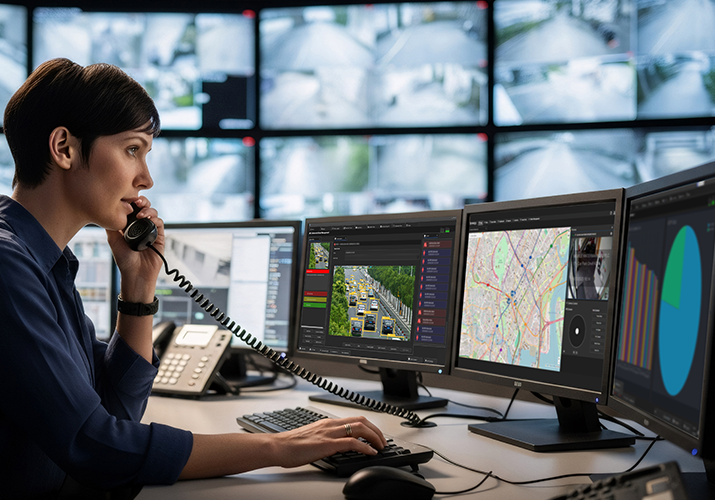
Synergy security and surveillance software integrates multiple systems, including CCTV, radar, AIS vessel tracking, alarm inputs, and condition sensor data, to deliver a single, comprehensive view for enhanced safety, security, and operations management. A view that can be accessed anywhere.
Authorised teams can monitor multiple turbine arrays and infrastructure assets from a central operations centre or securely via mobile devices in real time. When an alarm triggers, Synergy can automatically pan COEX PTZ cameras to the location, allowing operators to verify if a crew dispatch is needed. This avoids wasted transfers and accelerates response.

2. Ensuring cameras survive harsh marine conditions
Salt-laden air, gale-force winds, and vibration take their toll, and standard cameras do not meet the crucial specifications required for 24/7 monitoring. Cameras built for these conditions, such as COEX cameras, come with DNV certification and IP ratings as standard.
How COEX cameras help
Available in PTZ, fixed, thermal, and multi-modal models – for both hazardous and safe areas – COEX cameras are certified to international standards and engineered with marine-grade housings, heaters, and wipers. This resilience ensures evidential-quality video in all weather conditions, keeping operators informed even in the presence of salt spray, storms, or freezing fog.
3. Protecting subsea cables and export equipment
Array and export cables are the backbone of offshore wind energy generation. A single strike from a trawler’s gear or a vessel dropping anchor can cause outages lasting months and costing millions. Deliberate sabotage is also an increasing concern.
How the combination of Synergy and COEX helps
Synergy can integrate radar and AIS feeds to track marine traffic around exclusion zones. If a vessel slows or drops anchor near a cable corridor, workflows are triggered, and cameras automatically pan to track movement. Long-range PTZ and thermal COEX cameras provide the necessary visual confirmation. This evidence supports effective incident management, from issuing warnings to contacting maritime authorities, long before damage is done.
DID YOU KNOW
It’s estimated that one day of downtime for a 500-megawatt wind farm costs around £360,000¹.
4. Safeguarding maintenance crews
Technicians working offshore face significant hazards: climbing towers, working in nacelles, and handling high-voltage switchgear. Compliance with PPE and procedures is critical, especially when crews are isolated.

How Synergy helps
Synergy’s suite of AI-based video analytics tools can detect that workers are wearing the required helmets, harnesses, and high-visibility clothing. These tools can also flag falls or unsafe lone working practices. Crew members and control room staff are instantly alerted when a risk is detected, ensuring adherence to safety protocols and facilitating faster rescue if needed.
How COEX cameras help
COEX cameras' superior imaging capabilities provide trusted verification even in poor visibility, reducing false alerts. That means crews are only mobilised when a situation is genuine, lowering risk and reducing unnecessary exposure to hazardous environments.
DID YOU KNOW
The total recordable injury rate in global offshore wind farms rose 7% from 2023 to 2024². At least seven deaths occurred across the offshore wind industry in 2024³.
5. Detecting equipment degradation early
Constant salt spray, humidity, and vibration accelerate wear and tear in all offshore environments. Wind energy is no exception. Cable terminations, transformer housings, and tower bases are all vulnerable to damage. Missing early signs of failure risks expensive unplanned downtime.
How Synergy helps
Synergy enables condition-based monitoring by combining SCADA alarms with video footage. If vibration thresholds are breached or temperatures rise, workflows trigger COEX or other third-party cameras to visually confirm the anomaly.
How COEX cameras help
Fixed and thermal COEX cameras positioned at turbine bases, joints, or substations provide continuous inspection. Analytics such as image change detection, along with radiometric tools that monitor heat variations and automated workflows triggered by specific parameters, alert operators early to issues like corrosion, overheating, or fluid leaks, helping extend asset life and prevent unplanned outages.
DID YOU KNOW
Extreme weather conditions cause approximately 30% of the total corrosion to offshore wind turbines.
6. Strengthening cyber-physical security
Like any critical infrastructure site, protection against cyber risk is essential. Breaches designed to adjust controls or impact power generation could have a significant impact on the national power supply.
How Synergy helps
Synergy can validate unexpected control changes with live video to verify whether engineers are on-site. If no one is present, the system can automatically isolate the process and trigger an operational workflow to confirm authorised activity. With advanced data encryption, role-based access controls, audit trails, and secure remote logins, Synergy also prevents cybercriminals from exploiting video networks as a potential entry point.
How COEX cameras help
By delivering resilient, evidential video from both hazardous and safe zones, COEX cameras ensure operators can trust what they see, making it harder for spoofed alarms or manipulated data to go undetected.
COEX cameras feature built-in cybersecurity measures to protect both video data and the broader network. They use encrypted video streaming to stop footage from being intercepted or viewed without permission, HTTPS connections to securely transfer data between the camera and other systems, and 802.1x network access control to make sure only trusted, authorised devices can connect.
¹ Enhancing Cyber Resilience - Offshore Wind
² Offshore Wind Injury Rates
³ Wind Power Monthly
Synergy Cyber-Assured Security and Surveillance
Synergy is CAPSS certified, providing independent assurance that the platform meets recognised cyber security standards for advanced physical security and surveillance systems.
Learn More